Schedule of Upcoming Events
Please note: Meeting times, dates, locations and speakers are subject to change.
Information is regularly updated.
Our meetings will be in-person AND online whenever possible and safe, and for members who do not live near the Philadelphia area.
Our events are USUALLY scheduled on the same day and time each month, e.g., first Monday for Everything Genealogy. However, they might be moved to another week to work around Jewish or national holidays or other events. Our presentations/speakers may vary depending on the speaker’s availability.
Sunday, October 11, 2026
1:30 PM (1 PM for Schmoozing and Mentoring)
Zoom Meeting
Speaker: Karen Franklin, Director of Family Research at the Leo Baeck Institute & Director of Outreach for JewishGen at the Museum of Jewish Heritage
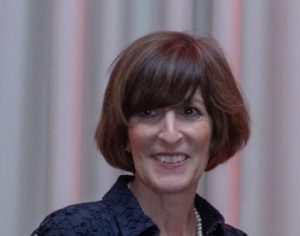 Karen is Director of Outreach for JewishGen and Director of Family Research at the Leo Baeck Institute. She is a past president of IAJGS, and has served as chair of the Council of American Jewish Museums, the Memorial Museums committee of the International Council of Museums, and played leadership roles in many other professional organizations.
Karen is a native of the Philadelphia area and a member of JGASGP.
Topic: A Story of Survival in Southern France
Among her numerous projects, Karen has spent over a decade tracing the histories of more than 100 refugees assisted by the Lehman family before, during and after the Holocaust, One person survived in hiding in Southern France during the War, but the details of her experience were not determined — that is, until descendants donated her papers to the Leo Baeck Institute. In this lecture, Karen describes how she tracked down descendants of the rescuers, the shocking stories she uncovered, and the resources she used in the search. The research is ongoing.
Sunday, November 15, 2026
1:30 PM (1 PM for Schmoozing and Mentoring)
Zoom Meeting
Speaker: Mark Halpern, JRI-Poland and JGASGP Board Member
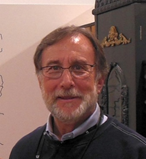 Mark worked for an International Fortune 500 Company for 32 years. In 1996, while on business in Poland, Mark visited Bialystok, his mother’s birthplace. Upon his return home, Mark dove down the rabbit hole searching his Galician and Polish roots. Retired for 20 years, Mark works with JRI–Poland, JewishGen, IAJGS, and JGASGP helping others research their roots.
Mark has been the JRI-Poland coordinator for eastern Galicia and the Bialystok area for 25 years and cooperates with Gesher Galicia as a partner associate. Mark is on the Board and Executive Committee of JRI-Poland, the founder of BIALYGen – the JewishGen Bialystok area research group, and past President of JGASGP. Mark chaired the program committees for the 2009, 2013, and 2024 IAJGS Conferences, served on the Program Committees of the 2018, 2020, and 2021 Conferences, and served as advance coordinator for the 2018 Warsaw Conference. Mark is a member of the Program Committee for this year’s Conference. Mark was honored in 2018 with the IAJGS Lifetime Achievement Award.
Topic: Formerly Galicia! – Understanding It’s Jewish History and Records
This presentation will provide a brief overview of the formation of Galicia within the Austrian Empire and their treatment of the Jewish minority. We will also cover the history of laws and regulations that governed Jewish life and record keeping in Galicia.
The work of Jewish Records Indexing – Poland and Gesher Galicia has made vital records and other historical documents more readily available to Galician researchers. This session offers an examination of Galician vital records along with a strategic framework to help researchers in acquiring records to further their research. Most importantly, this talk will make sense of the regulations covering civil marriages that impacted the legitimacy and surnames of children. Close examination of sample birth, marriage, and death records will reveal the information contained in the records.
Sunday, December 13, 2026
Hybrid Meeting
1:30 PM (1 PM for in-person Schmoozing and Mentoring)
Reform Congregation Keneseth Israel, 8339 Old York Road, Elkins Park, PA 19027
Speaker: Andrew Zalewski, Historical Research Advisor and Former Vice President of Gesher Galicia
 Dr. Andrew Zalewski is a former professor of medicine at Jefferson University in Philadelphia. He has authored two books on Austrian Galicia: Galician Trails: The Forgotten Story of One Family and Galician Portraits: In Search of Jewish Roots, both of which reconstruct the story of his ancestors within a broader historical context. During his tenure as vice president of Gesher Galicia, he led archival research on Jewish educational access, cultural transformation, and legal rights in Galicia. He currently serves as a historical research advisor for Gesher Galicia and coordinates a multi-year project examining Jewish experiences in the Soviet-occupied region of former eastern Galicia.
Topic: NKVD Files: The Intersection of History and Jewish Genealogy
When World War II began in September 1939, the Soviet invasion of Poland brought former eastern Galicia—today western Ukraine—under Soviet rule and into the reach of the NKVD, the Soviet internal security agency. This talk brings to light the experiences of Jews swept up in that system: Jewish refugees who had fled German-occupied Poland, longtime local residents targeted for political reasons, and Jews from Austria, Czechoslovakia, Germany, Hungary, and Romania. Drawing on NKVD arrest files now searchable in the Gesher Galicia database, we will explore how these records preserve not only names and dates but also traces of individual lives. Confiscated photographs, letters, and personal documents offer glimpses into people’s journeys, losses, and identities during one of the most turbulent moments in Jewish history.